
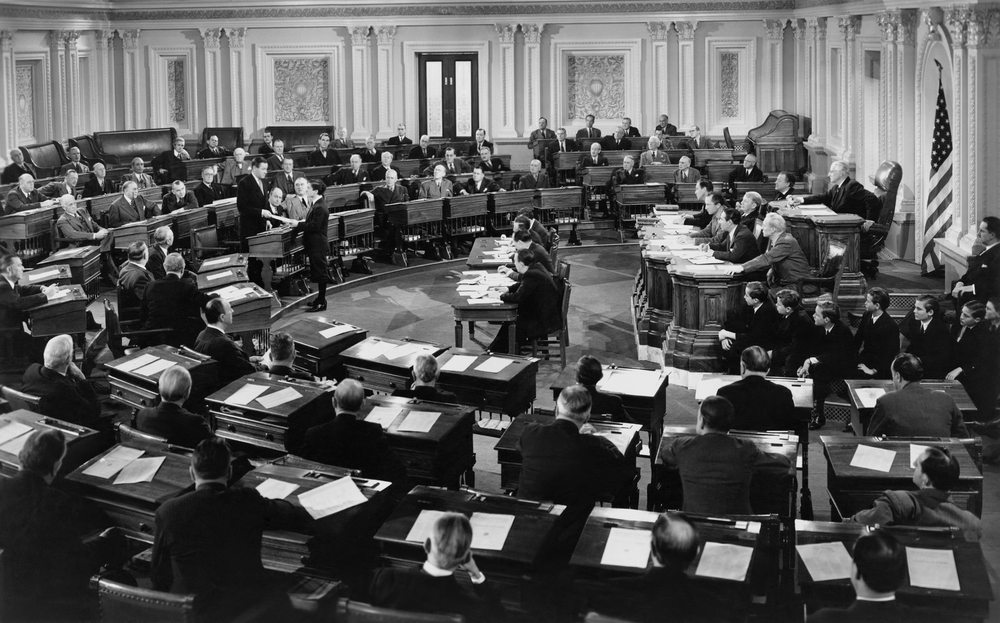
If you work in economic development, run a government affairs office, manage a legislative portfolio, or sit in any room where startup policy gets discussed, tune in. The people with the most structural power to change whether entrepreneurship succeeds or fails in a given city, state, or country are rarely the people in the conversation when that conversations happen. This is a design flaw; and the cost of it is measurable, in jobs not created, companies not formed, capital that moved somewhere else.
Government doesn’t just enable entrepreneurship. It defines whether entrepreneurship is really even possible. Which is to say, of course it is, entrepreneurs will make it work, let’s explore if you’re actually helping.
Before a founder incorporates, they need contract law. Before they issue equity, securities regulation weighs in. Before they protect an invention, we need to understand IP frameworks and support. Before they open a bank account, access credit, or hire their first employee, your government has already shaped every one of those transactions through the rules it wrote, the licenses required, and the friction it either removed or embedded into the process. The idea that government only matters once startups reach become companies is a fiction that lets policymakers off the hook for the ventures that never made it to scale in the first place. Government is involved from day one; the question is whether that involvement makes formation easier or harder.
Right now, by most measures, it makes it harder than it needs to be. 92% of U.S. voters say it’s difficult to start a business today, and 94% of voters, across party lines, agree that it’s vital to America’s future that everyone has a fair chance to start and grow a business, according the Government Leader Playbook by America the Entrepreneurial. Cross-partisan agreement at 94% on any economic question in American politics is statistically implausible under normal circumstances. That it exists here, and that the policy environment for startups remains as friction-laden as it does, tells you everything about the gap between political rhetoric on entrepreneurship and what legislators actually put into statute.
That gap is what policy professionals exist to close and if you’re not already doing that work, this week in Austin is a moment to start.
The case for why this work matters starts with a number most economic developers can recite; young firms account for about 20% of overall employment but create almost half of new jobs on average throughout the world. Innovation by young firms significantly contributes to aggregate productivity growth, accounting for half of it in the United States. That’s the OECD’s own analysis, not a think tank press release or a venture capitalist’s pitch. A category of firm (startups) representing one-fifth of employment is generating nearly half of all net new jobs. This was known over a decade ago, the data hasn’t changed, but most policy hasn’t either.
The mechanism connecting government action to startup outcomes is more direct than policymakers typically acknowledge. Countries with the lowest economic freedom scores had just slightly more than one new private entrepreneurial venture per 1,000 people, while countries with the highest economic freedom scores achieved a rate of new venture formation of more than six per 1,000 people, according to Russell Sobel’s research from the Center for Growth and Opportunity. Six times the rate of new venture formation. The difference isn’t culture, it isn’t geography, it isn’t access to talent in the abstract, it’s the policy environment: the structure of taxes, the volume of regulatory restrictions, the friction embedded in business formation, the rules governing capital access. These are things governments control directly. Which means policymakers who claim to support entrepreneurship while leaving those variables unexamined are not actually supporting entrepreneurship; they’re celebrating it, which is considerably less useful (trust me, we have enough celebration)
The stifling effect of regulatory burden, complexity, and uncertainty is particularly challenging for fragile startups, which lack the resources and scale of larger firms over which to absorb and amortize the costs of compliance. From the Center for American Entrepreneurship, whose proposal for a “regulatory on-ramp,” a reduced compliance framework applied to new businesses for their first five years, is one of the few policy innovations in this space that actually maps to how startups operate. U.S. regulatory agencies issued nearly 35,000 final rules over the past decade, 1,961 of which were economically significant, with annual costs exceeding $200 million. Regulations designed to govern companies with legal departments, compliance teams, and predictable revenue streams apply exactly the same burden to three-person seed-stage startups generating no revenue at all. That’s not policy failure through malice; it’s policy failure through category error (startups are not new businesses).
California had 403,774 regulatory restrictions on the books in 2022, roughly eleven times the number in Idaho, the least regulated state. Volume doesn’t automatically mean bad outcomes, specificity can protect founders as well as constrain them, but as a proxy for compliance burden on early-stage companies, restriction count is a reasonable starting point for any policy review oriented toward startup formation. Texas, worth noting with so many in Austin this week, is simultaneously tax-competitive and among the five most heavily regulated states by total restriction count. The gap between Texas’s reputation and Texas’s regulatory reality is a conversation happening at the Capitol right now.
The capital access challenge is where government’s role is most frequently misunderstood, usually in two directions simultaneously. Governments that invest directly in startups are doing the work of venture capitalists, which they are neither equipped nor positioned to do well. The better-documented and more replicable role is structural: designing accredited investor rules that don’t exclude qualified local investors through arbitrary net-worth thresholds; creating tax incentives that make angel investment economically rational in smaller markets; establishing SBIR and similar mechanisms that reduce the risk profile of early-stage technical research; funding infrastructure such as spaces and platforms explicitly for founders; and ensuring that securities regulations enable the regional fund formation that emerging ecosystems actually need to develop their own capital base. Lower business regulatory, tax and bureaucracy burdens; better access to commercial infrastructure; ease of entry to markets and government programs are essential for developing entrepreneurship, according to Research Policy analysis from David Audretsch, Alessandra Colombelli, Luca Grilli, Tommaso Minola, and Einar Rasmussen, of 43 countries over nearly two decades.
That’s the list. It doesn’t include more pitch competitions, more coworking spaces, or more innovation districts with free Wi-Fi and no measurable outcomes. It includes structural policy choices that governments make or don’t make and that produce observable, measurable results.
The distinction between startups and small businesses deserves its own conversation, because the conflation of those two categories is responsible for a large share of why entrepreneurship programs underperform. As I’ve written extensively here, the OECD has been explicit for more than a decade that high-growth, innovation-driven firms require different policy instruments, different capital structures, and different timelines to impact than small and medium enterprises. Of the total jobs created by new companies, approximately 50% are created by high-growth startups with high scaling potential, which represent only about 1 to 5% of all new firms by count. If you are allocating policy resources proportionally to firm count rather than firm impact, you are systematically underinvesting in the companies responsible for half of all net new job creation while spreading your budget across the vast majority of firms that, however valuable locally, do not drive the economic transformation you are reporting to elected officials that you’re pursuing.
Defining startups in statute, separately from traditional small businesses in all tax, grant, and investment language, is the minimum viable policy intervention for any jurisdiction serious about this distinction.
A brief I put together with TexCap Policy Institute in 2025, makes three foundational recommendations that any state or city could operationalize regardless of its current ecosystem maturity: define startups in statute; coordinate regional venture development by connecting incubators, accelerators, venture studios, universities, and corporate labs with economic development offices; and establish startup-focused curriculum distinct from small business programming for both founders and potential investors. This is a minimum infrastructure for a government that actually wants to compete for the next generation of high-growth companies, and they require legislative action rather than administrative goodwill.
The public affairs dimension of this, meaning the direct engagement between startup ecosystems and legislative and regulatory processes, is where the policy professional’s role becomes most consequential. Startups are getting crushed by politics, not product, startups like Plaid and Chime grew not just by building better banking interfaces, but by navigating federal regulation like Dodd-Frank and the CFPB. In ClimateTech, breakthroughs are constrained by permitting, tax incentives, and carbon credits, policy bottlenecks, not product problems.
The sectors generating the highest-value startups right now, AI, climate tech, fintech, biotech, are also the sectors with the highest regulatory uncertainty. Founders in those sectors are spending time and capital on compliance before they’ve generated revenue, which is a structural policy failure that has a structural policy solution. It requires someone in the room with legislators when those rules get written. Startup Development Organizations have a responsibility to shape policy, to influence university curriculum that still thinks a business plan is a final project, to show up when cities make zoning, broadband, or workforce decisions that will either unleash the next Canva or kill it before it begins, and to get in the room with legislators when they debate tax structures that disincentivize growth.
None of that happens without the people whose professional mandate is this kind of coordination. Economic development professionals, government affairs specialists, legislative staff, and city and state officials who work on competitiveness and investment attraction are the only people with simultaneous access to both the policy levers and the ecosystem context needed to do this well. Founders don’t have time to lobby while building their companies. Investors are focused on portfolio, not statute. The policy professional is the connective tissue between the entrepreneurial ecosystem and the legislative environment it operates inside, and the work of that connection, done consistently and with empirical grounding rather than political theater, is what actually produces the kind of startup-friendly environment that attracts capital, retains talent, and drives the job growth that economic development was supposed to produce in the first place.
If any of this is the work you’re trying to do, or the conversation you’ve been trying to find your way into, two things are happening in Austin this week that you shouldn’t miss.

American House at the Texas State Capitol (Thursday, March 12, 2:00 PM – 6:00 PM) puts policy professionals and ecosystem builders in the same physical space as legislators to bring the conversation about startup policy into the halls of government where it belongs. This is not a pitch event. It’s a policy event. It is WAITLISTED now but register in case you make it in. I’ll be there.
This Sunday, March 15th, we’re hosting an informal meetup specifically for policy professionals, economic development leaders, and ecosystem builders who are in Austin, at 2 pm. No agenda, no panels, no keynotes. Just the people who do this work finding each other in the same room and starting the collaborations that usually don’t happen because nobody created the context for them. If that’s you, register here and reach out to me on LinkedIn.
The question isn’t whether government should be involved in entrepreneurship, it already is, at every stage, in every market, through every rule it writes and every friction it either removes or leaves in place. The question is whether the people with the power to shape that involvement are in the right rooms, talking to the right people, with enough empirical grounding to push past the ribbon-cutting instinct and toward the structural reforms that actually produce outcomes.


“Which means policymakers who claim to support entrepreneurship while leaving those variables unexamined are not actually supporting entrepreneurship; they’re celebrating it, which is considerably less useful (trust me, we have enough celebration)” – Paul O’Brien
Great stats, where are they from? => 94% of voters, across party lines, say everyone deserves a fair shot at starting a business. 92% say it’s currently hard to do.
Chris Markl, America the Entrepreneurial
[…] the startup industry encouragement because we “learn from failure.” The work I do in legislative affairs and ecosystem development is oriented precisely to improving that number, and a recent trip to Phoenix reminded me that the […]
[…] the startup industry encouragement because we “learn from failure.” The work I do in legislative affairs and ecosystem development is oriented precisely to improving that number, and a recent trip to Phoenix reminded me that the […]
[…] computing revolution, because people shared what they knew without hoarding or monetizing it. Public policy matters because it can remove barriers or get in our […]
[…] I covered this in Strengthening Entrepreneurship Infrastructure: A Policy Guide, again in Founders Can’t Scale What Government Won’t, and again in Startup Economic Policy That Matters for Entrepreneurs, because the message has to be […]