
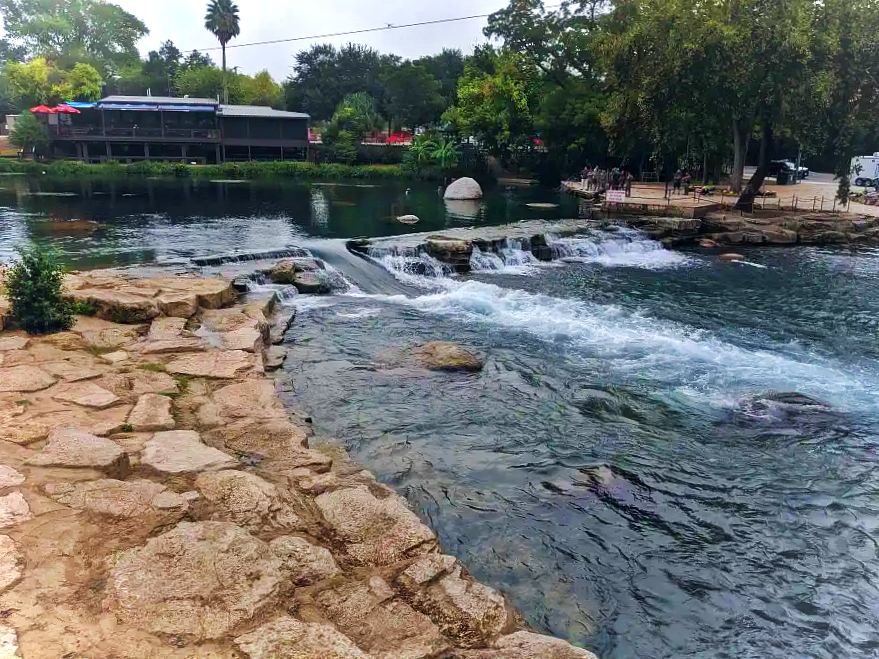
Humans have lived in San Marcos, Texas, longer than they have lived almost anywhere else on the continent. An archaeological fact, I might concede we can’t be sure, but that fact doesn’t matter to what got my attention; it should matter to entrepreneurs, investors, and economic development professionals.
People have been here for 12,000 unbroken years of water. Spring-fed, constant-temperature, never-stopped-flowing water rising from the Edwards Aquifer into Spring Lake, feeding the San Marcos River, sustaining everything within reach. And while the city has developed a charming identity around mermaids, tube rentals, and Texas State University traditions, the world is catching up to what the Coahuiltecans figured out in 10,000 BC: water is the most limiting factor in what Texas can become, and San Marcos has been protecting and researching the template for handling it since before any civilization thought to write things down.
Texas is staring down one of the most consequential resource crises in its history, and to entrepreneurs, that breeds innovation.

I am a water baby. People ask why I moved to Texas and while many refer to the culture, the economy, or the startup scene, for me it was because I grew up on lakes, rivers, and beaches. When people beat the heat by staying inside, I find a float and let the current take me.
A growing population, aging infrastructure, prolonged drought, and an AI data center construction boom that nobody seems to have put into a water planning model have combined to make fresh water the single most contested economic input in the state. In the Texas Tribune in September 2025, “We have a shortage of water, but on the other side, we like the Texas economy. It’s a tough balance, but we are coming to terms with the fact that water in Texas is the most limiting factor, and we need to find an answer.” Meanwhile, Jeremy Mazur, director of infrastructure and natural resources policy for Texas 2036, has noted that the state faces $154 billion in water infrastructure investment needs over the coming decades, with the $1 billion voters approved in 2023 being “literally just a drop in the bucket.”
Into this context swims San Marcos, a city of roughly 67,000 people sitting exactly at the midpoint between Austin and San Antonio on Interstate 35, home to the second-largest spring cluster in Texas, built on top of the Edwards Aquifer recharge zone, operating one of the country’s premier water research institutions through Texas State University, and officially designated by the Texas Legislature as the Mermaid Capital of Texas. That is more serious than it sounds. It means the state government formally recognized San Marcos’s water identity in statute, which is the kind of thing you can build a sector strategy on. Most cities spend decades trying to manufacture an identity, or worse, they just claim “tech” or being innovative; San Marcos is sitting on one 12,000 years in the making and largely underutilizing it as an economic engine.
The argument makes itself; San Marcos is positioned to become the water innovation capital of Texas, and the framework for doing so is already partially assembled. What it lacks, to borrow from my own framework in Startup Ecosystems, is design intentionality. The assets exist; the architecture connecting them into a functioning innovation economy does not yet. That is not a criticism; that is a diagnosis. And as I have written about Abilene, Bellevue, Baltimore, and Miami, the cities doing interesting things are not the ones imitating Silicon Valley; they are the ones excavating what is authentically theirs and building something no one else can copy.
Article Highlights
- Cities, History Builds Your Startup Ecosystem Case; Let me Explain…
- Innovation and Invention: The Creative Thread
- Startup Development Organizations in San Marcos, Texas
- Capacity Building Considerations: Where San Marcos Floats
- The Small-Town Argument: A Model for Every Town in a City’s Shadow
- San Marcos SourceTech
Cities, History Builds Your Startup Ecosystem Case; Let me Explain…
The San Marcos Springs area may be the oldest continually inhabited site in North America, with evidence of human activity dating back approximately 11,500 years. That cannot be ignored as a minor historical footnote; it is the whole argument for why the city has a legitimate, defensible, substantial identity.
Every civilization that settled here settled because of the water. The springs were sacred to the Coahuiltecans, who regarded the area as the site of their creation. Spanish explorers named the river for the feast day of Saint Mark when they encountered it in 1691. The Camino Real, the Old San Antonio Road, was routed specifically to pass through this water source because travelers and traders could not reliably cross Texas without it.
The Meadows Center’s Spring Lake contains more than 200 springs with water from the Edwards Aquifer that discharge an average of 123 million US gallons of water daily. Artifacts discovered in digs conducted from 1979 to 1982 date back 12,000 years. When General Edward Burleson, hero of the Texas Revolution and former Vice President of the Republic of Texas, arrived in 1847 and built a dam across the river, he was not making an aesthetic choice; he was recognizing the same economic logic the Paleo-Indians had recognized ten millennia earlier: this water is the resource that makes everything else possible.
His dam created Spring Lake and powered gristmills, sawmills, an ice factory, and an electric light works before most of Texas had any of those things.
From about 1691 until the Mexican Revolution in the early 1800s, Spanish explorers and settlers used the nearby Camino Real, and several attempts were made to establish a mission around the remarkable San Marcos Springs, because millions of gallons of clear water bubble up from the earth. The Chisholm Trail’s cattle drives used the river as a water stop. The longest known canoe race in the world, the Texas Water Safari, still begins at Spring Lake. And Texas State University’s students famously jump into the San Marcos River after graduation, which is either a beautiful tradition or a deeply on-brand signal that this city understands its identity.
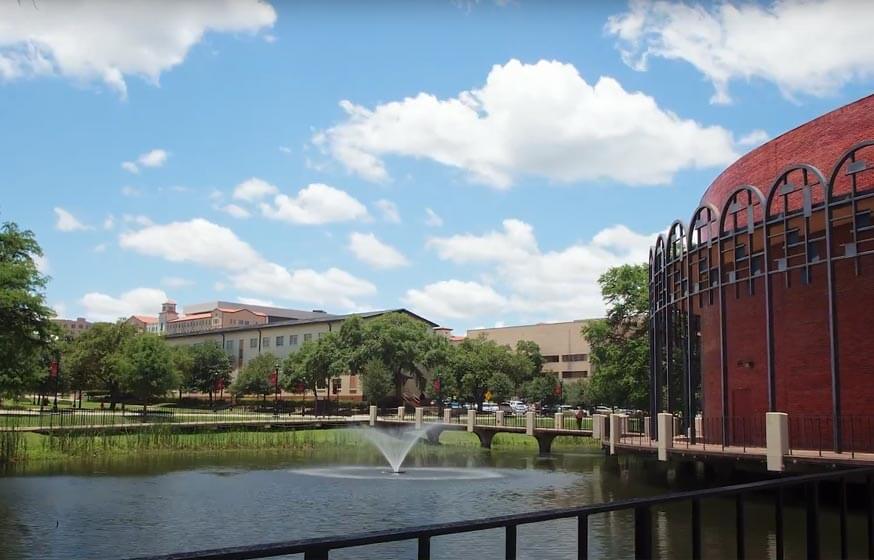
Why am I explaining all of that when I tend to write about startups and ecosystems? Because the culture of a region of the world has more to do with HOW people work, why, who they are, and what motivates them, than any employer or startup ideal. This defines here.
The San Marcos River has been described as “one of the planet’s most precious resources” in the Federal Register, and recent archaeological evidence suggests that the river area is the oldest continually inhabited site in North America. That federal designation sets the regulatory and research context in which Texas State operates its Meadows Center for Water and the Environment, and it establishes that the federal government has already validated what San Marcos knows about itself, that the water part of here is categorically different from water elsewhere.
The city’s modern growth trajectory has been no less remarkable than its ancient one. In 2013, the United States Census Bureau named San Marcos the fastest-growing city in the United States. Forbes called the greater region “America’s Next Great Metropolis.” Hays County, in which San Marcos sits as the county seat, has been among the fastest-growing counties in the nation for most of the last decade. The population of the city has grown from under 35,000 in 2000 to over 67,000 today, with the broader Hays Caldwell County region growing faster still. Population growth at that rate in a water-stressed state is, in itself, a market signal for water innovation investment.
Texas State University was founded in 1899 and it graduated a future President of the United States in Lyndon B. Johnson. The university grew from a teachers’ college into a comprehensive doctoral research university with over 44,000 students and $183M in research expenditures last year, making it one of the largest universities in Texas. That growth trajectory mirrors the region’s own: steady, increasingly serious, and no longer willing to be dismissed as a second-tier player in the Texas university landscape.
Innovation and Invention: The Creative Thread
San Marcos does not have the invention mythology of a Baltimore (first telegraph, first railroad) or the concentrated R&D identity of an Abilene (to pick a similarly sized town: military technology, nuclear energy research at Dyess), but its innovation story is threaded through water, biology, and the creativity that emerges when a city has been problem-solving the same resource challenge for twelve millennia.
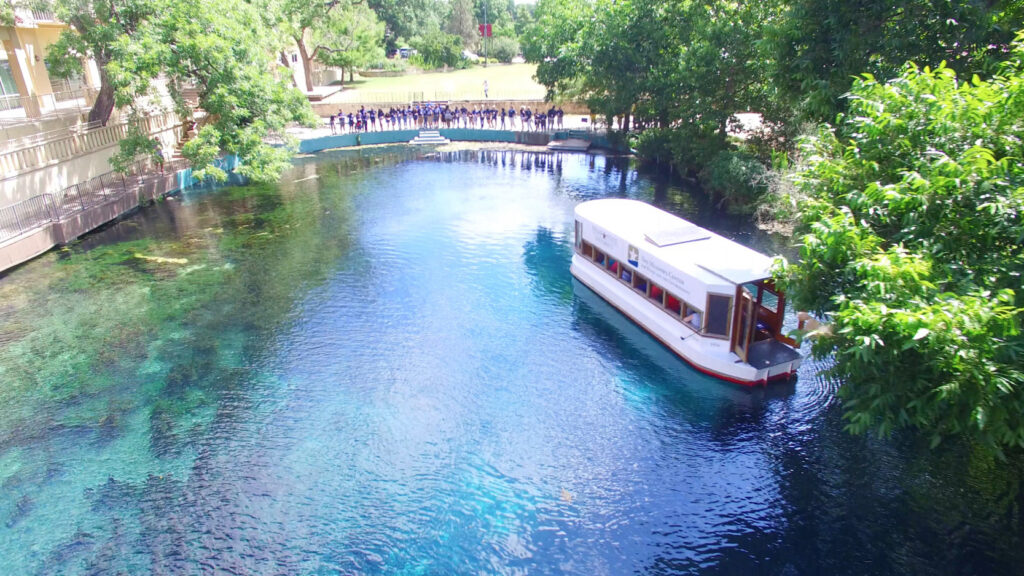
The glass-bottom boat, now synonymous with Spring Lake, was introduced to San Marcos in 1946 by Paul Rogers at Aquarena Springs. It was a genuine product innovation: a vessel specifically designed to make an invisible ecosystem visible to people who had no other way to experience it. Aquarena Springs itself became one of the most-visited attractions in Texas before the amusement park era, drawing 350,000 visitors annually at its peak and appearing on the cover of Popular Mechanics. When Texas State acquired the property in 1994 and converted it from a tourist attraction into the Meadows Center for Water and the Environment, that represented one of the more consequential institutional decisions in the city’s history, transforming a commercial entertainment asset into a research infrastructure for the most pressing resource issue in the state.
The Meadows Center participates in underwater archaeology, led the search for Henry Morgan’s lost fleet, and played a role in rediscovering the Satisfaction in 2011. That is not where most water research centers spend their time, but it illustrates the cross-disciplinary creativity that characterizes the institution. The Meadows Center has overseen a 53% increase in Texas wild rice since 2015 through ecosystem restoration work. It maintains the Spring Lake Management Plan, coordinates with the Edwards Aquifer Habitat Conservation Plan to ensure minimum continuous spring flows, and operates educational programs that reach thousands of students and policymakers annually.
I have floated, snorkeled, swam, and shared experiences with loved ones in this water more times than I can count. It’s life here.
Okay, but only water? The Materials Application Research Center (MARC), established at Texas State in late 2017, operates as an in-house innovation lab with robust entrepreneurship components and has attracted more than $5 million per year in funding from the Texas Legislature. MARC’s efforts include launching an advanced prototyping center, now called the Ingram Hall Makerspace, which provides prototype development services and applied research activities, as well as the more recent BobCatalyst initiative that will empower Texas State innovators to navigate the path from campus breakthroughs to global impact. The university’s computer science Ph.D. program, launched in fall 2017, was the first in Texas to combine computer science practice and theory with entrepreneurial and commercialization skills, a structural decision that changes everything because commercialization skills gaps is one of the main reasons university research never becomes startups.
Texas State’s STAR Park (Science, Technology, Advanced Research Park), now with the STAR One incubator, serves as the university’s research and commercialization hub, and is positioned at the center of what the university calls its Innovation Corridor role within Central Texas. STAR One is where the gap between research and startup formation gets the most institutional attention in San Marcos, and it represents the kind of infrastructure that can anchor a serious sector strategy if the surrounding ecosystem develops correctly.
The Forensic Anthropology Center at Texas State, known informally as a “body farm,” is the largest forensics research facility in the world of its type, and while it is a research asset rather than a commercial technology opportunity, it represents the university’s willingness to be the best in the world at uncomfortable things, which is a cultural signal worth noting when you are trying to build an ecosystem around a resource as politically charged as water.
At the inaugural Texas Innovation Conference & Awards, I reconnected with Texas State’s Director of Venture Development, Matt Sorenson, and he confirmed that the innovation and invention culture at Texas State is flourishing. “Record-breaking levels of research, top-level leadership support, increased investment into innovation & entrepreneurship resources, and a collaborative, can-do spirit across campus among the faculty, staff, and students have created an environment ripe for innovation and impact.”
Regional Macroeconomics and the Government’s Role
The Hays Caldwell EDP, the economic development group representing Hays and Caldwell counties, describes the region as part of the Texas Innovation Corridor, “anchored to the north by Austin’s Silicon Hills and to the south by San Antonio’s biotech industry, the burgeoning Texas Innovation Corridor has boasted unprecedented population growth, job creation, new business startups, and economic expansion for the better part of a decade.” That corridor framing is useful but also a little misleading in the way all corridor framings are; being the geographic midpoint between two major metros means you can either function as a thoroughfare that talent passes through on its way to bigger cities, or you can function as a distinct economic node that attracts capital and founders on its own terms.
San Marcos is currently doing more of the former than the latter, so let’s change that.
The major employers in San Marcos today reflect a transitional economy that has not yet committed to a sector identity. Texas State University itself is the dominant employer, with the Gary Job Corps Center (the largest in the United States) serving as another anchor institution. The retail sector is significant in a way that is often the case between major metros: Premium Outlets and as Texans know and love, Buc-ee’s; the busiest retail centers in the country as a regional commercial engine that has little to do with innovation. Health care, education, and government round out the major employment categories but that’s often the case in every small-midsized city. The economy is growing rapidly, but it is growing as a bedroom community and service economy, not as an innovation hub.
That is the gap this article is about.
The government’s role in San Marcos’s entrepreneurship story is simultaneously its strongest asset and its most underutilized one. The Texas Water Development Board, the Edwards Aquifer Authority (EAA), the Hays Calwell Economic Development Partnership (HCEDP), Texas State’s research infrastructure, and the Meadows Center collectively represent a depth of public investment in water management and research that no other small city in Texas can match. The policy environment is also shifting in San Marcos’s favor with extraordinary speed.
In 2025, the 89th Texas Legislature passed Senate Bill 7 and House Joint Resolution 7, paving the way for up to $1 billion annually in water infrastructure funding, with Texas voters approving the constitutional amendment as Proposition 4 in November 2025. The legislation expands eligible projects to include desalination, water reuse, out-of-state water acquisition, and other alternatives, while establishing a Water Supply Conveyance Coordination framework. The Texas Water Development Board followed by completing its largest bond issuance in agency history, approximately $2.5 billion, to fund projects in the State Water Plan. As of December 2025, a total of $235 million had been distributed to 45 projects through rural and water-loss assistance programs.
The Environmental Defense Fund characterized the 2025 legislation as positioning Texas “for long-term water resilience, unlocking significant funding to address aging infrastructure, support new water supplies, and invest in local groundwater science.” What none of that policy apparatus has yet done is direct capital toward water innovation startups as a category, a notion I similarly just covered about Texas Biosciences. State procurement, federal infrastructure programs, and the Texas Water Fund represent addressable markets for water technology ventures, and San Marcos has the research pipeline to feed those ventures.
The data center water crisis adds urgency that borders on panic. Texas is building dozens of massive data centers, and according to the Houston Advanced Research Center, existing data centers in the state will consume approximately 25 billion gallons of water in 2025, with projections suggesting that number could rise to between 29 billion and 161 billion gallons annually by 2030. Margaret Cook, Vice President of Water and Community Resilience at HARC, has warned that “it is concerning that we have this explosive growth in data centers but no way to forecast that water use from a state or regional planning perspective.” The innovation sectors being called for in response, liquid immersion cooling, heat reuse systems, atmospheric water generation, on-site desalination, are precisely the categories where a university with a water research center and a research park with commercialization infrastructure could be producing startups right now.
The Edwards Aquifer Authority, headquartered in San Antonio, manages the aquifer that makes San Marcos’s springs possible. The EAA is an institutional stakeholder with both regulatory authority and deep technical knowledge of the water systems that underlie everything San Marcos is building on. A startup ecosystem oriented around water innovation would find the EAA a critical partner for both research access and regulatory navigation, and currently, that relationship appears to be largely inactive on the innovation side.
Notable Companies and the Commercial Foundation that Establishes This
San Marcos does not have a recognizable portfolio of breakout technology companies the way Austin or even San Antonio does, and pretending otherwise would be exactly the kind of boosterism that makes economic development reports useless.
What it does have is a set of companies and commercial patterns that point toward what is possible.
The outlet mall economy, anchored by San Marcos Premium Outlets and Tanger Outlets, made the city one of the most recognized retail destinations in Central Texas. This is not irrelevant to a startup ecosystem; retail density creates hospitality and service infrastructure that makes a city livable for talent, and the foot traffic and consumer research data generated by that retail concentration have actual startup applications for commerce analytics and consumer behavior ventures.
On the technology and innovation side, STAR One’s tenant companies represent the most direct line from research to commercial activity in San Marcos. The park has attracted medical device companies, materials research ventures, and technology commercialization activities that leverage Texas State’s growing research capacity. The presence of these companies in proximity to the university creates the kind of spillover that generates founder populations when managed correctly, an example being startup company Material, founded by Texas State graduate Chris Reyes and now a tenant at STAR One.
The Meadows Center’s research activities have commercial adjacency in water quality monitoring, species conservation technology, aquifer modeling, and environmental impact assessment. None of these have been fully commercialized through spin-out ventures, which is itself a significant observation: San Marcos has research that the market needs but lacks the venture infrastructure to convert it into products.

Splash Coworking, San Marcos’s water-themed coworking space, is worth noting because being so-named it understood the city’s identity better than most economic developers, and founder Carina Boston Pinales beat me to the punch. Their language around “springs creativity” and “headwaters of entrepreneurship” is on-brand in someone who has already drawn the connection between the water identity and the entrepreneurship story.
“Splash Coworking invites you to a space that flows and springs creativity, by creating a splash in the community of San Marcos, Texas. Splash Coworking creates a ripple from the headwaters of entrepreneurship, business, social innovation, culture, and community. We create a platform to dive into the river of business development and sustainable practices.”
The execution of that brand promise as a city is an opportunity unparalleled.
Startup Development Organizations in San Marcos, Texas
Texas State University Center for Innovation and Entrepreneurship (CIE) is an active and promising piece of the ecosystem. CIE runs the Bobcat Bazaar (a student marketplace program with 65-plus vendors), the Campus to Community Fund (which has secured over $100,000 for student ventures), Student Made Texas State (supporting 25-plus student businesses), the Open Penny Founder’s Table, the Bobcat Innovation Challenge, and an Innovation and Entrepreneurship Minor available to students across the university. CIE is doing real work with real students and deserves more recognition as the founder pipeline it actually is. Its constraint is that it is primarily oriented toward student entrepreneurship and early-stage idea development, which means it serves the left side of the startup ecosystem bow tie but leaves founders without meaningful bridge to growth-stage capital and commercialization infrastructure.
Texas State University BobCatalyst, is a new university-wide initiative designed to help faculty, staff, and students transform impactful research and ideas into market-ready innovations. Led by the Office of Innovation, Commercialization, and Engagement, BobCatalyst provides a continuum of support and resources from idea generation and validation through prototyping and launch. From customer-discovery training through their BobCatalyst Innovation Accelerator Program, to internal funding via Proof of Concept Grants, this initiative is forging the connections between the University’s record-breaking research growth and economic growth and impact.
ThinkBIG at BCL of Texas is a City of San Marcos initiative operated through a partnership with BCL of Texas that offers no-cost, one-on-one business and financial coaching at 302 W. Hopkins Street. The program supports businesses at every stage from exploration through capital acquisition and is specifically designed for the San Marcos business community. ThinkBIG is most useful as a bridge between early exploration and formalized business planning, and its integration of financial coaching with business coaching makes it more practically useful than programs that treat business strategy and capital access as separate conversations.
One Million Cups San Marcos is the local chapter of the Kauffman Foundation’s national peer networking and presentation program for entrepreneurs. The San Marcos chapter provides a weekly venue for founders to present their ventures and receive feedback from a community audience, creating the kind of low-stakes repetition that helps early-stage founders develop narrative clarity. One Million Cups is not a funding mechanism or an accelerator; it is community infrastructure that makes the ecosystem feel alive to newcomers. Its value is social cohesion, not capital formation.
Splash Coworking functions as both physical workspace and community hub for San Marcos entrepreneurs. As a 2019 recipient of Texas Workforce Innovation and Opportunity Act funding in partnership with Texas State and Rural Capital Area Workforce Solutions, it has demonstrated the ability to operate at the intersection of economic development, workforce development, and entrepreneurship support. Splash’s water-themed brand identity is genuinely distinctive and represents the kind of authentic regional character that makes an ecosystem memorable. Whether it evolves into a formal innovation hub or remains primarily a coworking facility will depend on whether it attracts anchor tenants and programming that make it a gravitational center for the ecosystem rather than a desk rental.
Meadows Center for Water and the Environment is not formally a startup development organization, but it functions as one for water technology ventures the way university wet labs function as pre-commercial infrastructure for biotech. Its research pipeline, institutional relationships, and technical expertise represent a de facto incubation infrastructure for water innovation that simply has not been formally activated as such. Texas State should be spinning ventures out of the Meadows Center the way UT Austin spins ventures out of its Energy Institute, and the fact that it is not yet doing so is the most significant gap in the entire San Marcos ecosystem.
STAR Park is the physical manifestation of the university’s research ambitions and is where the connection between Texas State’s growing doctoral research infrastructure and the private sector is most directly expressed. It has attracted technology and medical device tenants and serves as the bridge between the lab and the market. Its primary limitation is similar to such efforts everywhere: commercialization of university IP is a long, legally complex, politically navigated process that tends to favor licensing over spin-out formation, which produces revenue for the university but fewer founder-led companies than the ecosystem needs. Its primary opportunity is the ideal location between campus and the hospitality and service infrastructure near the outlet malls, and room for growth on its 58-acre site.
San Marcos Chamber of Commerce provides the standard chamber infrastructure including business listings, networking events, and policy advocacy. For startups, it is most useful as a gateway to established business relationships and local government access, and less useful as a venture growth resource. Chambers and startup ecosystems have an uncomfortable coexistence in most cities because chambers are structurally designed to serve existing businesses while startups need support for businesses that do not yet exist in their final form.
What is notably absent from San Marcos’s startup development landscape: a dedicated (actual) accelerator program for water technology ventures, a formalized angel investor network, a venture fund with a sector thesis aligned to water innovation or related climate technology, and a structured mentor network with documented domain expertise in water systems, environmental technology, and the regulatory landscape governing Texas water law.
These are not small gaps; they are the difference between an ecosystem with assets and an ecosystem that produces venture-scale outcomes. I mentioned an accelerator and yet I’m also known for being very critical of them, because most fail to deliver; it isn’t remotely difficult to create an actual accelerator that knows how to scale innovation.
So, honesty first: San Marcos does not have a mature venture capital ecosystem but it is close enough to the cities that what you have in the Austin – San Antonio Corridor is something more accurate of “Silicon Valley” than this misleading comparison of the City of Austin to the region of Silicon Valley. None of that means any of this part of the world, or yours, should aspire to be Silicon Valley, far from it, it reinforces though that cities trying to be startup ecosystems are too narrowly focused when within hours are, often, investors, colleges, companies, and more that matter to the region. The 35 corridor between the major cities here is the fastest growing region of the United States, and overlooking all this insults the founders who are actually trying to raise capital here.
What it does have is a set of funding access points ranging from federal programs to adjacent-city capital networks, with genuine white space for a locally capitalized water innovation fund that would be both strategically sensible and currently non-existent.
Federal and Program Funding: The SBA programs accessible through Texas State SBDC provide the standard federal infrastructure for small business lending, SBIR (Small Business Innovation Research) grants, and STTR (Small Business Technology Transfer) grants. SBIR and STTR are specifically relevant for water technology ventures with a research component, as they provide non-dilutive early-stage capital to companies commercializing federally relevant research, and the Texas Water Development Board’s funding landscape creates clear federal-state alignment for water innovation companies seeking grant capital.
The Texas Water Fund itself, now constitutionally supported at up to $1 billion annually through the voter-approved Proposition 4, creates a public procurement market for water innovation companies that is more valuable than grant funding in the long run. A San Marcos water technology company that establishes a relationship with the Texas Water Development Board is not just accessing capital; it is building a customer relationship with the entity that controls the largest water infrastructure budget in the state.
Campus to Community Fund (C2C): The CIE’s $100,000 Campus to Community Fund is the closest thing San Marcos has to a locally deployed seed capital vehicle specifically designed for student and early-stage founders. It is a start, not a finish, and its primary value is in signaling that the university is willing to partner with alumni and partners to put real capital behind the entrepreneurship programs it runs, rather than just running workshops and hoping founders figure out the money on their own.
Angel Capital: San Marcos founders currently access angel capital primarily through adjacent metro networks in Austin and San Antonio rather than through any organized local angel infrastructure. Austin’s Central Texas Angel Network (CTAN), San Antonio’s Geekdom Fund and LaunchSA ecosystem, and statewide networks like the Texas Halo Fund represent the practical capital sources for San Marcos founders who have outgrown the local support infrastructure. This is both a limitation and an opportunity; organized angel activity in San Marcos, particularly if oriented around water technology as a sector thesis, would give the ecosystem a funding identity that regional and national investors could evaluate on its own terms rather than treating it as an Austin suburb.
Venture Capital: The practical VC landscape for San Marcos founders is Austin and San Antonio first, with a handful of Texas-wide firms like LiveOak Venture Partners, Next Coast Ventures, Silverton Partners, and S3 Ventures evaluating companies across the Texas geography. For water technology specifically, there is a growing national interest from climate-focused funds: Piva Capital, Breakthrough Energy Ventures, S2G Ventures, and several impact-oriented funds have active water technology investment theses. The problem is not that capital for water innovation is unavailable nationally; the problem is that San Marcos lacks the investor relations infrastructure to route that national capital into local ventures. We know why venture capital avoids startup ecosystems, the issue is rarely the absence of capital; it is the absence of a compelling, legible ecosystem narrative that makes investors believe the deal flow quality justifies the visit.
Strategic Capital and Corporate Venture: The data center operators, water utilities, and municipal water authorities that are most urgently seeking water technology solutions are also potential strategic investors for water innovation companies. Microsoft, Amazon, and Google all have sustainability and water commitments that create corporate venture rationale for investing in cooling technology, water reuse systems, and aquifer management tools. None of them are currently looking to San Marcos for those solutions, but the structural logic is clear: the company that solves data center water consumption sits at the intersection of two of the largest capital pools in Texas right now. That company should be in San Marcos.
Capacity Building Considerations: Where San Marcos Floats
The framework in Why Startup Ecosystems Fail at Scale identifies ten specific structural considerations that determine whether an ecosystem has the capacity to produce and sustain venture-scale companies. Applied to San Marcos, the diagnosis is simultaneously encouraging and instructive.
1. Overcoming Silos: Shared Infrastructure and Community
San Marcos has the classic silo problem that every university town develops when the university is the dominant institution: Texas State operates in one world, the city government operates in another, the chamber of commerce operates in a third, and the startup community that exists despite the absence of coordinated support operates in a fourth. The Meadows Center’s water research, the CIE’s student entrepreneurship programming, and the coworking community-building work are not coordinated into a single pipeline. A founder in San Marcos who is building a water technology company has to navigate these institutions independently because no single gateway routes founders across all of them. Imagine trying even beyond that to connect to similar work in Austin or San Antonio… impossible.
Extending convenings explicitly to startup ecosystem coordination, with water innovation as the sector lens, would be the single highest-leverage structural intervention available to San Marcos right now. As this work on how ecosystem builders start ecosystems explains, the problem is that most ecosystem-building efforts try to build what healthy ecosystems look like rather than building the relationships and trust that make ecosystems function.
San Marcos needs a coordinator, not more programs.
2. The Missing Middle: Widening the Gap Between Early Startup and Established Company
San Marcos has good support for very early-stage founders and some support for established businesses (chamber, SBDC business advising). What it does not have is meaningful support for the companies that have found product-market fit, are generating early revenue, and need capital and operational expertise to scale. This is the “missing middle” that every mid-sized ecosystem struggles with, and it is particularly damaging in a university town because the student ventures that graduate from the CIE have nowhere to go except Austin or San Antonio the moment, they start to look serious.
The solution is not another accelerator program; it is a dedicated growth-stage support structure, probably in the form of a venture studio or accelerator with a specific water technology thesis, that can take post-CIE companies and connect them to the investors, customers, and advisors they need to move from $500,000 in revenue to $5 million. That entity does not exist in San Marcos. Its absence is measurable in the founders who left.
3. Secure Long-Term Funding and Incentives for Ecosystem Builders
The people running most of what’s here operate on grant cycles, university budget allocations, and SBA cooperative agreements that have no guaranteed continuity beyond the current funding period. Ecosystem building is a decade-long endeavor, and funding it in two-year chunks produces exactly the kind of short-term programming orientation that generates metrics (workshops attended, businesses advised) rather than outcomes (companies funded, jobs created, exits achieved).
San Marcos has a genuine opportunity here that most cities do not: the Texas Water Fund’s growing infrastructure creates a rationale for aligning water innovation ecosystem funding with state water infrastructure investment. An economic development case to the economic development efforts, the Texas Water Development Board, or the Edwards Aquifer Authority for sustained ecosystem development funding around water innovation is not a long shot; it is a natural extension of their existing missions. The political environment has never been more favorable to that ask, given the 2025 water legislation.
4. Measuring Outcomes Not Activity, and Promoting Success
Like most cities, what I can easily uncover is the data that doesn’t matter: number of workshops held, attendees counted, businesses advised, loans processed. None of those numbers tell you whether the ecosystem is producing founders who go on to build fundable companies. The Kauffman Foundation’s work on ecosystem metrics has been clear for years that activity metrics and outcome metrics are not the same thing, and communities that measure activity reward the wrong behaviors in their ecosystem builders.
What San Marcos should be tracking: the number of student and community founders who pursue their ventures beyond the university, the capital raised by those founders in the 24 months after their last formal ecosystem interaction, the companies that remain headquartered in San Marcos three years post-founding, and the proportion of those companies operating in water technology or adjacent sectors. None of those numbers exist publicly right now, which means the ecosystem cannot demonstrate its value to investors, cannot make the case for sustained public investment, and cannot attract the mentors and advisors who want to work with ecosystems that are producing visible outcomes.
5. The Culture and Behaviors That Make Collaboration Natural, Not Forced
San Marcos’s culture is collaborative in the way that small cities often are, and large metros rarely manage. Texas State’s student community, the downtown creative economy, and the river culture that brings people together physically (sometimes whether they want to be or not, given the tubing culture) create a social density that is genuinely useful for ecosystem development. People know each other here, which is not something you can manufacture in Austin or San Antonio regardless of how many networking events you hold.
The risk is that this collaborative smallness becomes insular. San Marcos founders need connections to investors, customers, and mentors who are not in San Marcos, and the local collegiality that makes the community warm also makes it easy for founders to spend too much time with people who cannot write checks or open enterprise sales channels. The ecosystem needs to be intentional about routing external relationships into San Marcos rather than routing San Marcos founders out of it.
That requires an external-facing narrative about what the city is building; not a tourism pitch, but a sector pitch aimed at investors and corporate partners who need what a water innovation hub would produce.
6. Including the Full Spectrum of Talent, Not Just Those Already Visible
Texas State University’s student population is majority-minority and the first in their families to attend college at rates that significantly exceed the national average. That is one of the most powerful founder pipeline assets any startup ecosystem could ask for, and it is almost entirely invisible to the venture capital community because the students are not going to TechCrunch conferences or appearing on Forbes 30 Under 30 lists. The CIE’s language about “underestimated talent becoming unstoppable” is exactly the right framing for what the ecosystem has, but framing alone does not change where capital flows.
Making inclusive entrepreneurship real in San Marcos means connecting the actual student founder population to the investor networks that can fund them, not just the investor networks that feel comfortable funding people who went to UT Austin. It also means extending ecosystem programming explicitly into the surrounding Hays and Caldwell county communities, where population growth is occurring fastest, but economic development attention is thinnest.
7. How to Architect Environments That Enable People to Perform at Their Highest Potential
Physical infrastructure matters in ways that ecosystem developers consistently underestimate. San Marcos has spaces but would benefit the concentrated, mixed-use innovation district that creates the accidental collisions between founders, researchers, investors, and mentors that drive ecosystem velocity. The Meadows Center at Spring Lake is the most intellectually obvious anchor for a water innovation district: build a dedicated facility adjacent to the world’s most significant water research institution, on the banks of the oldest inhabited spring system in North America and tell every water technology company in Texas they should be operating out of it.
That is not a small ask, and it requires capital and political will that the city does not currently have fully assembled. But it is the kind of architectural decision that distinguishes ecosystems that become destinations from ecosystems that remain pleasantly functional.
San Marcos should be building toward a physical presence that makes the water innovation identity undeniable.
8. What It Really Takes to Align Government, Academia, and the Private Sector
The 7th Americas Competitiveness Exchange on Innovation and Entrepreneurship brought decision-makers from more than 20 countries to San Marcos specifically to explore partnerships and economic development opportunities, including a Glass Bottom Boat Tour at The Meadows Center for Water and the Environment. That event happened years ago, and the alignment it catalyzed has not been institutionalized into ongoing sector development. Government-academia-private sector alignment is the hardest thing to build in any ecosystem because all three parties operate on different timescales, measure success differently, and are accountable to different constituents.
For San Marcos, the alignment around water is the clearest path because all three sectors have explicit, documented, high-priority interests in water. The Texas Legislature just committed $1 billion annually to water infrastructure. Texas State runs a nationally recognized water research center. The private sector is desperately looking for water technology solutions in the face of a data center-driven crisis. The organizational infrastructure to align those three interests around a shared water innovation strategy is the work nobody has yet formalized. It is the most consequential thing San Marcos’s civic leadership could decide to do in the next 18 months.
9. Ecosystems Accelerating Innovation and Reducing Risk by Unlocking Local Competitiveness
San Marcos’s competitive advantage is not that it sits between Austin and San Antonio; any city on I-35 can say that. Its competitive advantage is that it has the research infrastructure, the water identity, the regulatory relationships, and the cultural authenticity to build a water innovation cluster that nobody else in Texas can replicate. As I noted in the Bellevue analysis, “nearly half of Seattle’s unicorns were actually founded in Bellevue; that’s the kind of quiet outperformance worth paying attention to.” San Marcos has the opportunity to do for water technology in Texas what Bellevue did for enterprise software in Washington: establish a specialty identity that produces disproportionate outcomes relative to size.
The risk reduction argument for locating a water technology company in San Marcos is substantial: proximity to the Edwards Aquifer Authority and Texas Water Development Board (regulatory navigation), access to Meadows Center research and Texas State technical expertise (R&D cost reduction), and the state’s growing water infrastructure procurement market (customer development). That is a compelling package for a category-defining water technology company, and it is currently being offered to no one because San Marcos hasn’t yet formalized the pitch.
10. How Global Best Practices Can Be Adapted, Not Copied, for Local Realities
Water technology ecosystems exist in Singapore, Israel, the Netherlands, and Australia, and all of them have built their clusters around a specific local water problem rather than trying to serve a generic global market. Singapore’s water innovation cluster emerged from the city-state’s existential concern about water independence; the Netherlands built its global water technology leadership out of centuries of flood management necessity; Israel’s drip irrigation technology emerged from agricultural water scarcity in the Negev. San Marcos has a similarly compelling local problem: the Edwards Aquifer is facing increasing pressure from population growth, data center demand, and climate volatility, all while the river system that has supported life for 12,000 years is now being asked to support a 21st-century tech economy.
The lesson from every successful sector cluster is that global best practices are research inputs, not operational blueprints. San Marcos does not need to copy what Singapore built; it needs to study why Singapore built what it built (necessity plus research infrastructure plus government coordination plus export market orientation) and apply those design principles to the specific assets and constraints of Hays County, Texas. The result should be something that looks like San Marcos, not something that looks like anyone else.
The Small-Town Argument: A Model for Every Town in a City’s Shadow
This is perhaps the most important point in this entire article, and it is directed at every economic developer, mayor, university administrator, and ecosystem builder sitting in the shadow of a major hub trying to figure out what their city’s story is.
San Marcos is not going to become Austin. It is not going to become San Antonio. It should not try. It should not study Silicon Valley or travel to New York to learn from them. The moment a city in the shadow of a major hub commits to being a smaller, more accessible version of its neighbor, it has lost. Founders who want Austin move to Austin; founders who want San Antonio move to San Antonio.
The founders who come to San Marcos, or stay in San Marcos, come because of something San Marcos has that no one else does. Water is that thing.
“Abilene’s opportunity lies in being radically different, because that’s the defining quality of an entrepreneur and it’s the purpose of a startup.” In fusing what is uniquely theirs into an identity that cannot be copied, small cities in the shadow of major hubs become something no metropolis can be: specific. The cities doing the most interesting ecosystem work right now, as I covered in the Bellevue and Baltimore analyses, are not the ones trying to be more like Silicon Valley; they are the ones doubling down on what makes them irreplaceable.
For San Marcos, “irreplaceable” is straightforward to define. San Marcos Springs have never been known to stop flowing.
In a state and a world where water scarcity is becoming a first-order economic constraint, that is not a tourism curiosity; it is a strategic asset. Every smaller city in Texas watching Austin extract talent and capital from its region should be studying what San Marcos does next with water, because the template San Marcos builds for leveraging a specific natural and research asset into a sector identity will be the most replicable model in Texas.
The argument for San Marcos is ultimately the argument for every second-tier city that refuses to accept second-tier as a permanent condition: find the one thing you have that no one else has, build the most serious research and commercial infrastructure around that thing that anyone has ever built, and let the specificity speak for itself. The venture capital that currently bypasses San Marcos on its way to Austin is the same capital that bypassed Austin on its way to Silicon Valley until Austin stopped trying to be Silicon Valley and started being Austin. San Marcos already knows what it is. The work is making that identity economically productive at scale.
AcquiferTech, SpringTech, WaterTech (too obvious), I like SourceTech
San Marcos SourceTech
San Marcos does the cultural foundation exceptionally well. The water identity is authentic, the university community is engaged, the physical environment is compelling, and the civic institutions understand the region’s potential. The research infrastructure at the Meadows Center and STAR Park is genuinely distinctive, and the presence of a major public university with a growing research mission and a majority first-generation student body creates exactly the kind of founder population that builds companies grounded in real problems.
What San Marcos has not yet done is connect those assets into a sector strategy with teeth. There is no water innovation accelerator, no locally capitalized seed fund with a water thesis, no formalized mentor network with domain expertise in water technology, no organized effort to route national water technology investment to San Marcos, and no systematic measurement of whether the existing ecosystem programming is producing founders who build companies rather than founders who attend workshops. Those are not fatal gaps; they are design decisions that have not yet been made. We know how to do it.
The cities most worth watching in the Texas startup ecosystem right now are the ones that are about something specific. San Marcos is about water. It has always been about water. The Edwards Aquifer Authority, the Meadows Center, the spring-fed river, the 12,000 years of human habitation, the Texas Legislature’s multi-billion-dollar water infrastructure investment, the data center water crisis, and the global market for water technology innovation all point to the same conclusion:
San Marcos has a singular, defensible, and economically urgent sector identity available to it. It’s the source of all that flows here, it’s the source of Texas’ future, and let’s be realistic about the challenges throughout the world: San Marcos could be the source of water innovation desperately needed everywhere.


Well said. Like much of the West, the value in land is in the water. The potential in a place, as you point out, is figuring out the one thing you do best with the water you have on the land.
It was great to reconnect last week and thank you for helping steward this conversation! Let us know how we can help.
I love living here. We moved out here during covid from Austin. We were ready to buy a home and start a family and we simply could not do that in austin with a “Normal” income. So we started with Buda, then Kyle then found ourselves in San Marcos…We found our perfect little first family home and we love it. Taking the kids to the river almost year round. It is a beautiful and special place to be.
Truly, Central Texas is a beautiful place to be because all of this is within reach.
[…] hydrocarbon volume basin, West Texas as the wind and solar generation belt, the Hill Country hold our future in water, and Abilene as what Michael Bob Starr accurately described in an interview as “the […]