I sat across from a founder last week who spent the first eight minutes of his pitch explaining how hard everything had been. The fundraising was brutal, their cofounder quit, and the product pivoted three times. By minute ten he finally got to the business. Had I been at my best, I would have cut him off at 45 seconds, but I was being courteous; more accurately, I was chewing on an idea that my friend Hans had planted in my brain the week previous, watching it now play out in real time. This founder’s startup wasn’t bad, what they had committed was introduced to me as a 16th-century lesson in confidence.
He was broadcasting his suffering as though it were evidence of his worthiness.
The word for what he lacked has been around for about five hundred years: sprezzatura
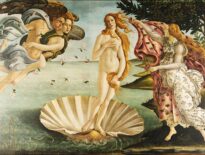
Coined by Baldassare Castiglione in his 1528 book The Book of the Courtier. Castiglione defined it as “a certain nonchalance, so as to conceal all art and make whatever one does or says appear to be without effort and almost without any thought about it.” The book became one of the most widely circulated texts of its era; by 1903, it was found in a dozen languages. The courtier Castiglione described was expected to be skilled in arms, rhetoric, music, dance, and politics. But the skill itself wasn’t the point; the point was making it look like second nature. According to the Count in the text, if the courtier’s preparation is discovered, “it quite destroys our credit and brings us into small esteem.”
The moment the audience sees you trying, you’ve already lost.
The single clearest tell I’ve found that separates founders who close from founders who flounder is something none of them can articulate but all of them demonstrate or fail to demonstrate: sprezzatura. Studied carelessness. The art of concealing art. Not because deception is the goal, but because the depth of preparation is so thorough that the presentation of it becomes invisible. The business just makes sense when you hear it. The founder just seems to know.
If you’ve ever watched a founder nail a pitch and thought, “that looked easy,” you were watching sprezzatura. If you’ve ever watched a founder sweat through 47 slides of text-heavy PowerPoint while narrating their personal trauma and asking you to believe in the dream, you were watching the absence of it. And I promise you, the investor on the other side of that table can tell the difference in about four seconds. Why GOOD incubators make you practice your pitch is that the first impression a founder makes is a leading indicator; what they lead with, how they open, what they emphasize first, tells everyone in the room how they think, what they value, and where they’ll stumble.
Sprezzatura is what makes that first impression land as competence rather than performance.
Article Highlights
What Sprezzatura Is Not (Because You’re Already Confusing It)
Sprezzatura is not “fake it till you make it.” That’s performing with confidence you don’t have, it’s cosplay. Elizabeth Holmes wore a black turtleneck and dropped her voice two octaves and fooled a lot of smart people for a while, and the fact that she explicitly copied Steve Jobs’ iconic look tells you everything about the difference between imitation and the real thing. Holmes faked the aesthetic of mastery without possessing any of the underlying substance. That’s not sprezzatura; that’s fraud with wardrobe choices.
Steve Jobs, on the other hand, was the genuine article. His presentations looked effortless because they were ferociously rehearsed. Walter Isaacson’s biography revealed that Jobs asked designer Issey Miyake to make him about a hundred identical black turtlenecks, enough to last for the rest of his life, eliminating wardrobe decisions entirely so he could focus mental energy on what mattered. His product launches were legendary not because he was a naturally gifted speaker (he worked at it obsessively) but because he refined every detail: One word on the screen, a pause, applause. You never saw the forty rehearsals, you just saw a man who made technology feel inevitable. The effort was monumental while the display of effort was zero.
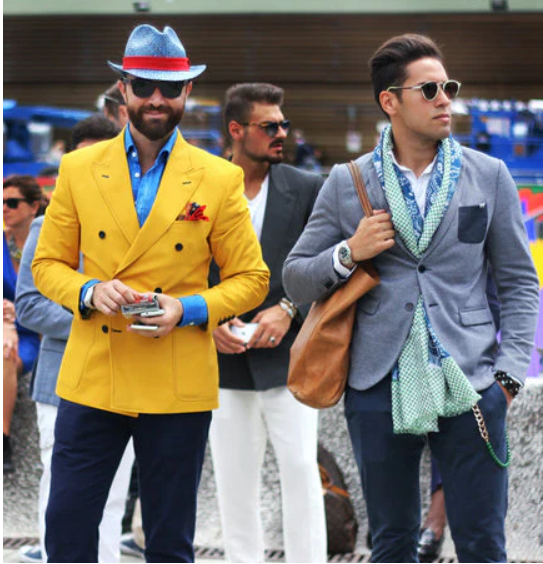
Italian fashion icon Luciano Barbera described sprezzatura as “quiet confidence or low-key style,” saying the most forceful statement is understatement. In menswear, sprezzatura shows up as the tailored suit worn without a tie, the shirt collar left slightly open, the pocket square stuffed casually rather than folded into origami. I found that the concept caught mainstream attention thanks to House of Gucci, where the Italian aesthetic of bold, unbuttoned elegance reminded a global audience that looking like you didn’t try is actually a discipline. I was reminded of Tom Ripley and Dickie Greenleaf in 2024’s fantastic Ripley; the man in the impeccable suit who appears to have gotten dressed in three minutes spent an hour selecting those specific textures, those specific proportions, that specific amount of “carelessness.” Rolling up shirt sleeves with natural precision rather than stiffness, mixing patterns in a way that suggests innate taste rather than rigid calculation; the appearance of effortlessness achieved only through deep knowledge of the rules you’re appearing to break.

If you can’t see how this maps to startups, you haven’t been paying attention to my series of articles helping people communicate better than a pitch deck template.
Your Pitch Screams “I’m Trying Too Hard”
Good pitch work has never been about raising capital. It’s about constructing a story so coherent, so aligned with your capabilities and your market and your actual challenges, that it compels action from everyone who hears it. Emphasis on “actual.” The narrative doesn’t paper over weaknesses, it contextualizes them inside a structure that makes the whole venture feel inevitable.
That inevitability IS sprezzatura applied to business.
The founder who walks into a room having done that work doesn’t need to perform; they describe reality, and the reality is compelling. The numbers come out naturally because they’re internalized, not memorized. The hard questions get answered without flinching because the founder has already wrestled with them privately – almost all of you fail this. The competitive landscape gets acknowledged without the weird defensive energy that comes from founders who say, “we don’t really have competitors” (which, as I’ve written about in how I know your pitch is bad, is one of the fastest ways to lose a room). The entire conversation feels like a discussion between peers, not a supplicant performing for capital.
Contrast that with the founder I see constantly: over-rehearsed, script-dependent, and visibly rattled the moment someone asks a question. That founder has done preparation, sure, but the wrong kind. They prepared for a performance, not for mastery. They filled out the pitch deck slides because that’s the limit of what the local Accelerator knew how to teach them what mattered. Castiglione would have spotted the difference in seconds. The Count’s advice was that by obscuring his knowledge, the courtier gives the appearance that his presentations “sprang up from nature and truth rather than from study and art.” The best pitches feel like truth, not theater and not demo day karaoke.
Delivery must feel like a casual conversation rather than a keynote. That’s thousands of hours of thinking and doing compressed into something that looks like you just showed up and started talking. Founders need to understand that this is what they’re competing against for attention, for credibility, for trust.
Hustle Culture Is Sprezzatura’s Mortal Enemy
American startup culture is, in many ways, specifically designed to destroy sprezzatura since we celebrate the grind. We post screenshots of 4 AM Slack messages like they’re war medals and we share “day in the life of a founder” content that’s struggle tourism that makes others feel good. The entire mythology of the founder as a suffering hero (a mythology I’ve picked apart in Founder Burnout or the Wrong Fuel?) valorizes visible effort. Pain is treated as proof of commitment while exhaustion is treated as evidence of worthiness.
Castiglione would have found this repulsive. Not the work! They worked incredibly hard.
The advertisement of it.
A courtier who bragged about how many hours he spent practicing his swordsmanship would have been laughed out of the room. You practiced for years and then you walked into the duel and made it look like you’d been born with a blade in your hand. The point is that in competitive environments where reputation determines outcomes, the person who makes it look easy wins. Not the person who works the hardest, and definitely not the person who talks the most about how hard they work, but the person who converts their preparation into an appearance of natural competence.
I keep thinking about this in the context of what I see at SXSW every year; founders roaming Congress Avenue, practically vibrating with anxious energy, business cards in hand, trying to corner anyone who looks like they might write a check. Compare them with the founders I actually enjoy talking to: the ones who are relaxed, curious, asking questions, having actual conversations. The relaxed ones invariably have better businesses. Not because relaxation causes success, but because they’ve done enough work on their venture that they don’t need to perform urgency for strangers. Their confidence isn’t theatrical, it’s structural. It comes from having a narrative that holds together, economics that make sense, and a team that addresses the obvious gaps.
The Effective Founders Project, which assessed more than 900 startup leaders across 40 countries, found something that sounds counterintuitive until you think about it through the lens of sprezzatura: the most effective founders are actually less confident than the least effective founders. The overconfident founder is broadcasting certainty they haven’t earned. They’re performing, not operating. The effective founder has internalized the complexity, done the actual homework, and presents with the kind of measured clarity that reads as competence precisely because it doesn’t oversell. The Dunning-Kruger effect (where the least skilled are the most certain, and the most skilled underestimate themselves) is essentially the empirical validation of what a Renaissance Italian wrote five centuries ago.
Sprezzatura is an Organizational Operating System
Sprezzatura is NOT a presentation trick! It’s an organizational design principle.
A startup that operates with sprezzatura is one where the internal machinery is so well-organized that the external experience feels seamless. The customer doesn’t see the three-person team pulling all-nighters. The investor doesn’t see the spreadsheet that took forty hours. The partner doesn’t see the internal pricing debate. What they see is a company that appears to work.
That appearance isn’t a lie; it’s the product of alignment.
This is why I push so hard on narrative as organizational alignment rather than narrative as pitch performance. My framework forces founders to derive Mission, Vision, Value Propositions, Culture, and Values from the same foundational story. When those layers are coherent (and Mission and Values are fixed bookends while Vision, Value Propositions, and Culture evolve between them), the company operates with an internal consistency that makes everything downstream look effortless. The pitch feels natural because it’s a description of what’s actually true. The customer experience feels seamless because the team isn’t improvising around misaligned priorities. The hiring works because the culture isn’t aspirational word salad on a wall but an operating reality candidates can feel walking through the door.
So much alignment underneath that the surface stays calm.
Contrast that with the startup where the CEO tells investors one story, the CTO tells engineers another, and the sales team is freelancing a third narrative entirely. We see this constantly. That startup is the courtier who trips during the dance, drops his sword, and then loudly explains to the duke that he’s been very busy lately. Nobody’s buying it. The dissonance is visible. And visible dissonance is the death of trust. We teach startups to pitch to investors even if they don’t want venture capital BECAUSE the exercise forces a level of internal rigor that benefits every other relationship the company has. That rigor is the hidden work.
The resulting clarity is the sprezzatura.
The MVP Problem (Again, Because You’re Still Getting It Wrong)
This also reframes the entire conversation about MVPs, a conversation most of the startup world continues to botch. The conventional interpretation of “minimum viable product” seems to be, “build a crappy version of your thing and throw it at the market.” That is anti-sprezzatura. That is walking onto the stage with an untuned instrument, playing badly, and telling the audience you’re still learning.
Good luck collecting tips (still wonder why investors aren’t writing checks!?)
As I’ve beaten this drum in You Can’t Buy an MVP and Lean Startup Is Wrong… or You Are, your MVP is not the minimum viable product. It’s the minimum viable proof. Proof that you can do the thing that isn’t obvious about you as a founder. If you’re technical, your MVP proves you can create demand. If you’re a businessperson, your MVP proves you can execute.
The founder who launches a buggy app with a “we’re in beta!” disclaimer plastered across the header is, by contrast, announcing that they haven’t done the work. And while the startup ecosystem has conditioned us to forgive this (because “iteration!” and “fail fast” and other slogans that have replaced thinking), the market is less generous. Customers don’t care about your learning curve and investors don’t care about your growth arc; they care about what’s in front of them. Right now. And what’s in front of them should look like it was easy, even when it wasn’t.
An Analogy That Actually Works?

I’m drawn to media industry analogies in startup lessons: how a film or band might teach us things that matter. Fashion is a step out of my wheelhouse but as I compared Hans to the latest founder of the week who was clearly uncomfortable talking, sprezzatura makes the concept tangible in a different way; the art of looking like you got dressed without thinking while having, in fact, thought about every single detail.
The founder with sprezzatura does not announce his style; choices gently display mastery. Every “casual” decision was deliberate.
Now think about your startup’s external presentation: Your website, your deck, your product onboarding, and your customer support responses. Do they feel like someone who knows what they’re doing, or do they feel like someone who’s winging it with Canva templates and ChatGPT boilerplate? The founder who takes the time to get the details right (clean copy, coherent visual language, a product experience that doesn’t apologize for itself) is doing the startup equivalent of choosing the right linen jacket. Signal competence through details that most people can’t consciously articulate, but everyone can feel. Pre-tied bowties, clip-on ties, and pre-folded pocket squares are the pitch deck that’s obviously template-driven and too polished in the wrong ways (stock photos, buzzword-laden slides, a financial projection that’s clearly a hockey stick pasted over fantasy). That signals that the founder doesn’t actually know the business well enough to present it in their own voice.
The Renaissance Was a Startup Ecosystem
Renaissance Italian courts were competitive talent markets where dukes competed for the best courtiers, painters competed for commissions, and advisors competed for patronage. The entire system ran on reputation, relationships, and the ability to demonstrate capability without appearing desperate. Replace “duke” with “lead investor,” “courtier” with “founder,” and “patronage” with “term sheet,” and you have a reasonably accurate description of the modern VC ecosystem.
Castiglione’s insight was that in environments where reputation determines survival, the person who makes it look easy wins.
Five hundred years later, nothing about that dynamic has changed. Nothing. The founders who raise capital, attract talent, close customers, and build durable companies are overwhelmingly the ones who make it look like those outcomes were always going to happen. That’s not delusion, that’s what real preparation looks like from the outside. You can’t paste composure over incompetence. The courtier couldn’t show up at the joust having never ridden a horse and then “act casual.” He could only be casual if he’d already mastered horsemanship.
Applied to your startup:
Know your numbers the way you know your own phone number. Revenue, burn rate, unit economics, CAC, LTV, runway. When an investor asks about margins, the answer should come out of your mouth the way a jazz musician plays. Because the thinking already happened, at 2 AM, over a spreadsheet. Repeatedly.
Build the narrative before you need it. The startup framework I’ve refined through years of work with thousands of founders exists for this purpose. It forces you to answer six fundamental questions in an order that maps to reality rather than PowerPoint convention. When you’ve done that work, you don’t “prepare for the pitch.” The pitch is just a description of what’s already clear.
Stop performing your struggle. I cannot overstate this. I’m not saying pretend everything is fine. I’m saying that when someone asks how things are going, there’s a difference between “We’re working through X challenge and here’s our approach” and “Oh my god, it’s so hard, we’re drowning, but we believe in the dream.” One conveys competence while the other conveys a founder who probably does need to be replaced.
Invest in the team so the operations look seamless. A startup where every customer interaction is mediated by the frantic, sleep-deprived CEO is a startup without sprezzatura. A startup where the team handles things with consistency and professionalism because the culture is clear and the processes work? That’s a company that looks like it was easy to build but wasn’t. It looks that way! And in competitive markets, appearance of ease creates trust, which creates opportunity, which creates the outcomes that justify the effort.
Does your startup look easy? Not because it IS easy (building a venture is one of the hardest things a person can do, and I’ve spent enough years watching people do it to know this viscerally) but because you’ve done the work necessary to make it appear that way? If the answer is no, the fix isn’t cosmetic. A new slide template won’t save you. A speaking coach won’t save you and you don’t have a presentation problem. You have a foundation problem.
- The narrative isn’t coherent enough.
- The economics aren’t internalized.
- The team alignment isn’t there.
Fix those things, and the presentation takes care of itself, because when you actually know your business, explaining it feels as natural as breathing.
Five centuries ago this was written and I doubt this startup book is on your bookshelf. Go do the work that makes the exhaustion unnecessary to hide because your experience with what you’re doing is so practiced that you’re telling it like it is.