

I once crossed paths with Bill Gurley, author and venture capitalist, so long ago and so briefly that I couldn’t reconstruct the details if I tried. The startup ecosystem was smaller then, known names were less frequent, and it was easier to recognize people; it was a lot like my experience in Austin as it boomed – from a small city where everyone connects to what we have here now. Generally, in our sector of the economy, unless you’re a founder pitching, you shake hands, say something cordial, and move on.
Two decades later, he’d gone to being the guy behind Uber, OpenTable, Zillow, and Stitch Fix; a run that makes most VCs look like they’re playing an entirely different sport. So, when I found myself watching him take the stage in Austin with Matthew McConaughey talking not about fund returns or portfolio strategy but about how to build a life doing work you actually love, I cleared my schedule from editing my own book.
This wasn’t a celebrity moment; this was a parent moment.
I have three kids, and whatever else you want to say about spending twenty-plus years helping entrepreneurs figure out what they’re building, advising investors on where to put capital, and working with economic development professionals trying to understand why talent moves toward certain places and not others, the thing that really keeps me up at night is simpler and more personal than any of that. I want my kids to find work that fills them, not work that funds a lifestyle they wandered into by default, not a job title their parents can explain at dinner parties. I want them to run toward Monday mornings. I want joy to come before obligation, love before labor, and a dream pursued before the conveyor belt of tests, applications, colleges, and “safe” choices narrows their whole perception of what’s even possible.
Watching McConaughey tell the story of calling his dad, sweating, terrified of admitting he was going to drop out of law school to pursue film, brought this to life. His dad’s response, after McConaughey said “Yep” to being sure that’s what he wanted: “Well, don’t half-ass it.” That’s it. That’s the whole parenting manual right there. No lecture about risk, no pivot to a backup plan, no “but what about job security?” Just the confidence to say: if that’s the dream, go run it down properly. McConaughey entertainingly noted that when he was in college, he started laughing at different things in films and crying at different things than most of the people around him; instead of being embarrassed by that, he learned to embrace it as the signal that he was wired differently for that medium.
That’s what “know what you are” actually looks like, and it’s a lot messier and earlier than most career advice acknowledges.
Gurley, asked when he realized he was a category of one, described studying best practices in his field and then relentlessly working to figure out how to get above them, particularly on Wall Street. Not just to master the conventional game, but to understand it thoroughly enough to see where the ceiling was and then figure out what was above it. That’s a different posture than most people bring to their careers, which tend to involve learning the rules and then executing them competently, rather than treating the rules as a floor to push off from.
I’ve been fortunate. This work (exactly this: the startup ecosystems, the founders, the capital formation, the writing and teaching and advising and building) is what I’ve wanted to do. It’s not a grind I endure between vacations; it is, if I’m being candid, a privilege I don’t take lightly. The conventional wisdom that 90% of startups fail genuinely pisses me off that we’re not doing better by founders given what we know. Which made that evening in Austin feel less like a book launch and more like a confirmation of something I’ve been living without having the right framework to articulate. Bill Gurley, it turns out, spent a decade building that framework.
Article Highlights
The Book Itself Before I’ve Even Finished It

Let me be straightforward: I haven’t finished Runnin’ Down a Dream yet. I’ve started it but it was 10 pm when I got home and I wanted to write about what it means to a parent.
When Bill signed my copy of the booked asking my name, there was no question that my response was, “Actually, this is for my kids.” I was at the launch event, and I’ve been digging into it from every angle available, which, given that it’s already generating the kind of endorsements that most business books couldn’t dream of, isn’t hard to do. Gurley described it himself as a passion project of almost ten years, aimed at giving people the motivation and the methods for thriving in a career they actually love. Ten years. On a single question. That’s either obsession or a man who understood, through his own experience, just how much the answer matters.
Nearly six in ten people would do things differently if they could start over. That’s not a productivity problem and isn’t a skills gap; that’s most of the workforce sitting inside a professional life they chose wrong, or more precisely, that got chosen for them by a system designed to sort and place people rather than help them figure out what they’re actually built for. Gurley himself was one of them. Computer science degree, MBA from UT Austin, landed at a prominent tech company, and was promptly bored out of his mind. He left, started over, and ended up at Benchmark making some of the best bets in venture capital history. Boredom was the signal. Most people spend decades ignoring signals exactly like that, “Young people find it easy to postpone what you really want to do.”
Easy to postpone; not impossible to find, not unclear about. Easy to postpone, because the system makes postponement feel responsible. Parents push kids toward economically safe lanes. Extracurriculars get stacked not because a kid loves them but because every other kid is doing them, a dynamic that Jonathan Haidt and Greg Lukianoff captured precisely in their critique of modern parenting culture, describing a “resume arms race” where families drive kids into endless activities to pad college applications, not because those activities reveal or cultivate genuine passion. I have observed this a lot since my move from Michigan, growing up, to Texas now, faulting Texas that, “everyone seems to pick one sport so they excel at it.” I praised Michigan where I was in art, music, theater, debate, track, swimming, and more; without realizing that the difference wasn’t Michigan vs. Texas, it was generationally different parenting. Gurley framed the endpoint of the new race, “Getting in this lane of focus to get into the limited spots for the seemingly better jobs.” That lane gets narrower the longer you stay in it, and by the time you’re forty and finally sitting down to ask yourself what you actually love, it can feel like the question arrived too late.
Except it’s never too late, which is the whole point of Bert’s story told on stage: someone handed Bert a blank sheet of paper and told him to write what he loves to do on the left side, and what he’s good at on the right side, then circle whatever appeared on both sides. Bert did it at forty, and what he circled made its way to Tito’s Handmade Vodka, which became one of the great American entrepreneurship stories. Forty years old, blank sheet of paper, two columns. That’s the whole exercise. The tragedy isn’t that people do this at forty; it’s that almost nobody does it at all.
Daniel Pink’s research on regret found that regrets of inaction outnumber regrets of action two to one, and the ratio gets worse with age; the “what ifs” compound over time in a way that actions taken (even ones that failed) simply don’t. Pink puts it, when people are young they have roughly equal action and inaction regrets, but as they age into their thirties, forties, fifties, and beyond, inaction regrets take over completely and the overwhelming category of those inaction regrets involves boldness: the risk not taken, the path not started, the thing they really wanted to do that they kept finding reasons to postpone. Gurley’s entire book is, in a sense, the preemptive treatment for that specific category of regret.
Six Principles to Thrive in a Career You Actually Love
From that experience, and from a decade of research on what actually separates people who love their work from the 60% who’d take a do-over, Gurley distilled six principles: chase your curiosity, hone your craft, develop mentors in your field, embrace your peers, go where the action is, and always give back. None of those are complicated. Heck, it sounds like what I tell entrepreneurs. Yes, they are harder than they sound, as every single one runs counter to the default career advice most people actually receive, which is basically a variation of “find something stable, build credentials, and don’t take unnecessary risks.”
The curiosity principle is the foundational one and the most misunderstood; it doesn’t mean dabble in many things, it means find the subject that makes you read one more paper at midnight without anyone telling you to, “Fascination matters more than talent. What differentiates you is being insanely fascinated with a subject, so that continuous learning comes for free.” So that continuous learning comes for free. When you’re fascinated, you don’t have to manufacture discipline or force yourself through professional development modules; the learning happens because you literally cannot stop. The correlation between obsession and success isn’t actually financial motivation or upward mobility; it’s that when you’re obsessed, learning is a form of entertainment rather than labor. “Would you learn more about what you love than watching Netflix?” Gurley asked the Austin audience. That’s the test. That’s fascination, and you have to be fascinated in what you do.
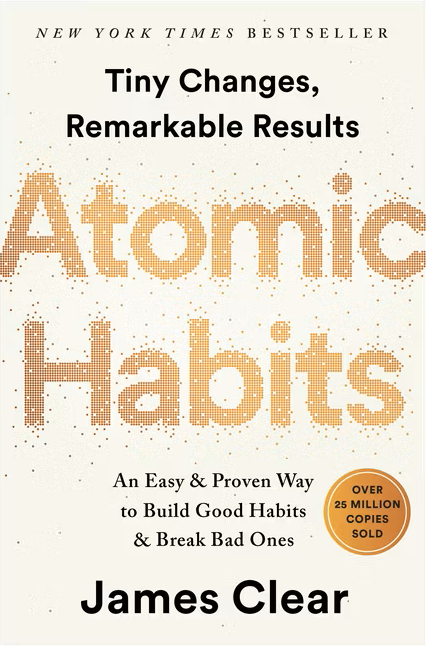
James Clear, whose Atomic Habits is probably the most widely-read behavior change book of the past decade, called the unifying thread of success across every case study in the book “the relentless hunger to learn about the thing you love.” Hunger, not curiosity in the hobbyist sense, but the kind that turns into craft, which turns into the depth of expertise that makes someone genuinely hard to replace.
Gurley’s instruction to “study the history of your field” resonated with me personally, and not just as advice; it’s something I live. I’m obsessed with the history of entrepreneurship and venture capital, and Gurley’s point was obvious when framed: when you walk into a room and you know why things are the way they are, when you know the history and the evolution and the failures and the pivots that created the current landscape, you demonstrate a depth of obsession that nobody in that room can fake. Then, he said, study the edge too, the newest trends and technology, the frontier of your domain. History plus edge. That’s what “insanely fascinated” actually looks like in practice; it’s not just enthusiasm; it’s the accumulated context that makes your judgment qualitatively different from someone who started paying attention recently. Which person would you hire? Which founder would you fund?
The peer group principle tends to get under-weighted, I think, as everyone focuses on mentorship because it sounds right (and granted, develop mentors in your field is Gurley’s 3rd principle). Your peer group isn’t just your social circle; it’s your ambient standard: you normalize the work ethic, the ambition, and the expectations of the people you spend the most time around. Surround yourself with people who are obsessive about getting better, and obsession becomes unremarkable in the best way. Daniel H. Pink, who wrote Drive and has spent significant time researching motivation, said the book “replaces vague advice with vivid human stories and delivers a bracing call to act boldly in every part of our lives.” The peer group principle is that your friend group isn’t static; you have to go find the people with whom you’ll thrive, which takes you directly to principle five.
“Go where the action is” sounds obvious until you examine how many talented people are living in places, working in organizations, and spending time in rooms where nothing interesting is happening. Geography and proximity still matter. Despite globalization, remote work, and quarantine throwing us for a loop, many of us have been saying this incessantly to both workers and founders: where you are together matters. The density of ambition still matters. My home being Austin isn’t an accident, and the people who ended up here made deliberate choices to be in a place where ambitious, curious, builder-type people are the norm rather than the exception. That’s a career strategy, and it’s one that most people never execute consciously because they’re optimizing for cost of living or proximity to family or some other variable that has nothing to do with where their field is alive.
We heard about Tony Fadell, who invented the iPod and co-invented the iPhone before building Nest, shared of Runnin’ Down a Dream: “Schools never teach a ‘how to find work you love’ class. Bill Gurley clearly maps the path with sharp insights and real tools.” That’s accurate, and it’s also a fairly damning observation about what education has been doing with itself for several generations. You can spend four years and six figures learning to execute someone else’s system, while never being asked once what you’re actually built for. This is where my passion intersects with this treatise on careers, where entrepreneurship intersects with identity and where the most important career decision isn’t which company to join but whether you’ve ever honestly answered Bert’s two-column question.
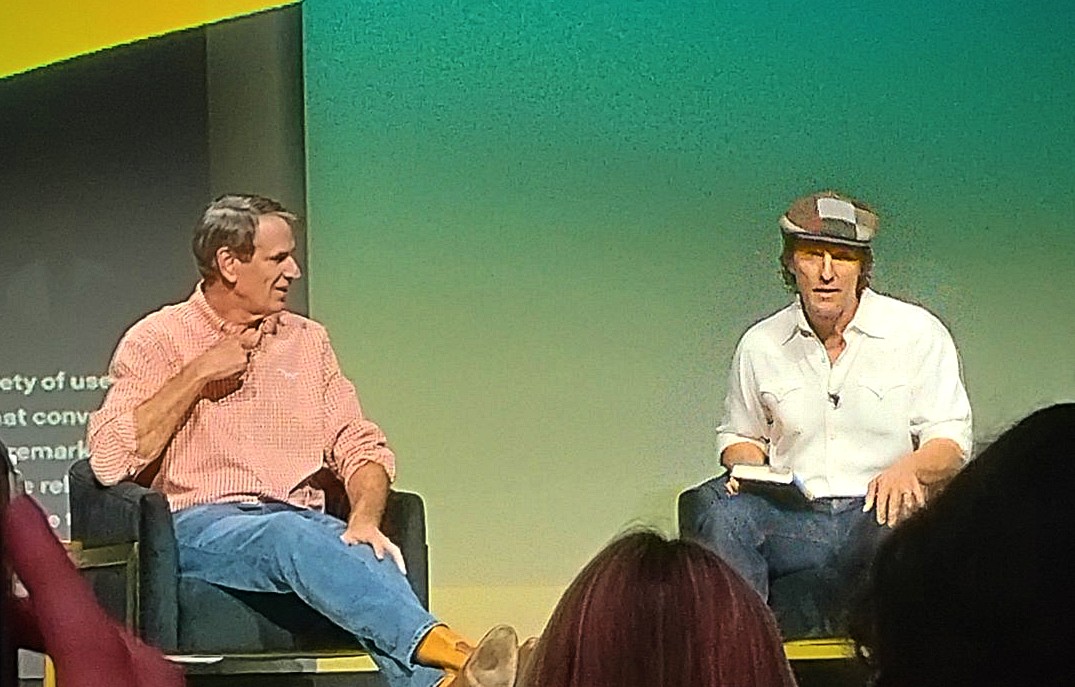
One more principle that deserves its own moment isn’t actually a principle in the book, it caught my attention as McConaughey and Gurley shared thoughts with the room, “always have a side hustle.” I hear founders-in-waiting constantly explain why they can’t start anything while they’re employed, as if employment is a condition that precludes exploration. That reasoning is wrong, it’s an excuse, and more importantly it’s a missed shot.
A side hustle isn’t a distraction from your career and it’s not cheating on your employer (hell, if it is, they probably deserve it); it’s a second bet on yourself, a low-stakes laboratory for figuring out whether what you think you love actually holds up under the pressure of real work. You do want to work for a company that supports you, right? You should take two shots at success instead of one, and you learn faster than anyone sitting around waiting for the right moment (which is a moment that never actually arrives).
The McConaughey corollary to all of this: “Know that ‘no’ is part of the hustle.” And Gurley’s version: “Channel rejections in the right direction, as motivation. Turn failures into energy.” These aren’t affirmations; they’re operational instructions for how to metabolize the inevitable friction of doing something ambitious. The people who treat rejection as information rather than verdict are the ones who compound opportunity; everyone else treats the first no as confirmation of a fear they were already carrying.
The AI Disruption Is Real, and the Obsessives Will Be Fine
The career conversation in 2026 has developed a serious anxiety disorder about AI and automation, and the fear isn’t entirely misplaced. The WEF Future of Jobs Report 2025, surveying over 1,000 employers representing 14 million workers across 55 economies, projected 92 million job displacements by 2030 alongside 170 million new roles created, a net gain of 78 million jobs. Fear performs better on social media than nuance so course we’re all worried about AI taking our jobs; the 170 million new roles get buried in the anxiety. But Gurley shared, AI doesn’t threaten the people who are genuinely obsessed with their craft; it obliterates the people who were filling seats.
McKinsey’s research indicates that current technologies could theoretically automate roughly 57% of U.S. work hours but concludes that this figure measures technical potential in tasks, not the inevitable elimination of jobs. Tasks get automated; jobs held by people with genuine craft and genuine curiosity evolve. What AI is actually doing is making one thing extremely legible that was previously harder to see: the difference between someone who is genuinely obsessed with their field and someone who is tolerating their role. The tolerators are getting automated while the obsessives are getting amplified.
A founder who has been running toward a specific problem for years (reading everything, building prototypes, talking to customers at weird hours because they can’t stop thinking about it) has something AI cannot fabricate: accumulated context, pattern recognition, and the weird specific insight that comes from deep engagement with a domain over time. AI is a force multiplier for people who already have something worth multiplying. Gurley’s six principles, followed, produce exactly that kind of person; and in an economy where the premium on genuine expertise is accelerating rather than declining, that’s not a comforting platitude, it’s a structural advantage.
And keep in mind, expertise is NOT picking the right career path and it isn’t getting into the resume arms race, it’s finding your obsession so that you constantly learn, you put yourself in the left lane (as Gurley puts it), you think of work as your vacation (as did McConaughey).
The people who followed their curiosity into deep craft long before AI arrived are the ones who now look prescient. The ones who spent twenty years in a lane they didn’t choose are the ones for whom automation feels like a threat rather than a tool.
This is why the AI disruption conversation and the “find work you love” conversation are the same conversation. The Industrial Revolution’s arc is the useful frame: it destroyed specific jobs and created entire categories of economic participation that nobody could have described in advance. Two-thirds of today’s U.S. jobs didn’t exist in 1940. The people who got churned out were those whose only asset was availability for repetitive tasks; the people who found their footing had craft, genuine investment in their work, and the adaptability that comes from actually caring about a domain. AI is running that same play, faster. What’s genuinely different this time is that the automation of rote work opens up precisely the territory that Gurley’s principles point toward: deep curiosity-driven expertise, relational intelligence, creative judgment, and the domain-specific pattern recognition that makes someone a founder of their own future rather than a functionary in someone else’s.
What I Heard for Our Children
The parent version of all of this is actually simpler than the entrepreneurship version. Every parent optimizing for their kid’s college acceptance or job security or starting salary is essentially betting that the credentialing system understands the future better than their kid’s own obsessions do; given that six in ten people would start over if they could, the credentialing system’s track record is as bad as Startup Development Organizations keeping the average at 9 out of 10 startups failing.
McConaughey’s question from the stage near the end, “What can parents do better?” And Gurley’s answer was simple, “Create an experience where they can explore as much as possible.” Not structure, not extracurricular stacking, not the resume arms race: exploration. The goal of parenting, if Gurley’s decade of research is directionally right, isn’t to manufacture a competitive candidate; it’s to create enough exposure that a kid finds the thing that makes them obsessive before the conveyor belt decides for them.
What Gurley is arguing, and what that Austin evening crystallized, is that the playbook for a life you won’t regret is knowable. It’s not mystical; it’s six principles, grounded in real research, tested against people who are genuinely at the top of fields as varied as restaurant empire-building, NBA franchise management, and talent representation.
Gurley’s own framing of what burnout actually is cuts through a lot of the conventional wellness-industry noise around it: “We’ve taught how to do the grind, but not how to find what they adore doing. Competing against someone who does love that work, you’re going to fall behind.”
Burnout isn’t a resilience deficit; it’s what happens when people grind at something they never loved in the first place, against competitors who do love it and therefore never experience it as grinding at all.
“Step off the Conveyor Belt”
I want my kids to know that the conveyor belt is real, and it is specifically not designed with their particular obsessions in mind. I want them to understand that boredom in a role that’s supposed to be a dream come true isn’t ingratitude; it’s a signal worth listening to before twenty years have passed. I want them to take Bert’s blank sheet of paper seriously, preferably before they’re forty, and I want them to find Austin (or wherever the version of Austin is for their domain): the place where people like them are gathered, running at the same problem with the same hunger.
As for me, I already found that. It’s exactly this, the writing, the advising, the ecosystem building, the frameworks for how founders and investors and communities figure out what they’re actually supposed to be building. That’s the reason Gurley’s book resonates with me that most career books don’t. He’s not describing an aspiration, he’s describing the mechanism behind something that, when you’re living it, feels less like work and more like you finally stopped fighting yourself.
Runnin’ Down a Dream is worth a copy, and if you’re a founder, an investor, or anyone trying to build something that matters in this economy, it’s worth having the conversation it provokes with the people around you. If you’re in economic development or venture capital trying to figure out why some communities produce concentrated talent and others just produce resumes, the answer probably has less to do with tax incentives and more to do with whether you’ve built a place where people running down a dream can find each other. You can dig further into how startup ecosystems actually form if you want my architecture behind that intuition.


I’d start with what you’re good at on the left, and then add what you love on the right. We all love stuff we suck at, so follow your talent first, but apply it to something you love.
You may want to connect with https://www.meawisdom.com/ in Santa Fe, NM. Many of your insights are the fuel they are exposing within their programs and featured authors and pundits. Seems like it could be a good fit for you Paul O’Brien
Stacey Cost Santa Fe keeps coming up in my circles. Must be the world trying to tell me something
Thanks for the invite
Malur Narayan you didn’t get the Bluesky DM I sent you?!
Why didn’t I know?
Great post. Looks like a really cool event.
Prashant Sheth because you don’t follow me religiously! Let’s start a cult
I was one of the fortunate few who studied what they wanted to do…and then did it! I absolutely LOVED my life as a park ranger and park manager. Only this recent regime had dampened my morale, by destroying what many of us ain’t lifetimes to create, by destroying our national public lands and selling them off to the highest bidder.
The most recent atrocity is their plan to put a giant (and useless) wall through the middle of Big Bend National Park! One of my bucket list trips is to raft the Rio Grande in Big Bend…not an option of that POS puts a giant, pointless wall right next to the river, and gives it to Mexico!
But no…I don’t feel strongly about this.
I was so fortunate in my life to do what I love…and have some support for it (my mom still asks me when I’m going to get a “real job” making 6 figures for a giant corporation).
How do I not know about these cool things?
Scott Spielberger it was really unexpectedly incredible
Bryan Menell you just have to be on all social media, all the time. It’s really not that difficult unless you have a life
Brandi Bradford this is one of the best things I’ve read in a long time, I mean that seriously.
Something rare and amazing in someone who found work that wasn’t just a job but a calling, built something real with their life, and can still crack a joke about their mom asking when they’ll get a ‘real job.’
I hope you get that Rio Grande trip; I’ve rafted Idaho a few times and it’s worth doing it as much as possible.
Paul O’Brien already started